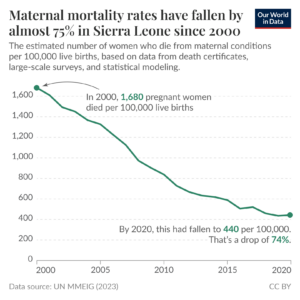
In 2000, Sierra Leone had the highest rate of maternal mortality in the world (alongside South Sudan). Nearly 1,700 women died for every 100,000 live births, making pregnancy and childbirth extremely dangerous for mothers across the country.
Since then, risks for mothers have plummeted. Sierra Leone has made remarkable progress. The government and healthcare partners have expanded access to healthcare, increased the number of skilled medical professionals, and improved the availability of essential medicines and treatments. In 2010, it rolled out free healthcare to pregnant women and children, helping remove major barriers to care.
RHCI became part of this progress in 2015 when we began serving the Tikonko Chiefdom. Since then, we have expanded maternal and child health services through outreach clinics, the construction of two Birth Waiting Homes, transportation for mothers in labor, and support for hospital expenses when emergency care is needed.
The impact has been significant. As shown in the chart, Sierra Leone’s maternal mortality rate fell by 74% in two decades—from approximately 1,680 deaths per 100,000 live births to about 440.
Improvements for newborns have followed a similar trend. While Sierra Leone still has one of the highest newborn mortality rates in the world, far fewer babies die in their first month of life today than two decades ago thanks to increased access to skilled care during pregnancy, delivery, and the critical days after birth.
There is still much work to be done. A woman in Sierra Leone remains far more likely to die from pregnancy-related causes than a woman in most parts of the world. Rates in the safest countries are around 100 times lower. But the progress made over the past two decades shows what is possible when communities, healthcare workers, governments, and supporters work together.
RHCI is proud to be part of that progress. Thank you to the many donors and supporters who have helped make safer pregnancies, healthier births, and brighter futures possible for families in rural Sierra Leone.
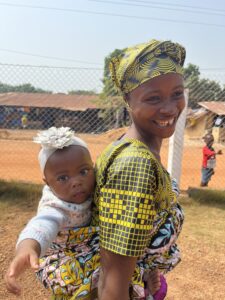
Madiatu and Mariama stayed BWH 6 month old. She took her to the clinic for vaccines
As we look to the future, we hope you will continue to partner with us in this life-saving work for mothers, babies, and children.
For more information, read THIS article is by Hannah Ritchie Our World in Data, March 12, 2025.